

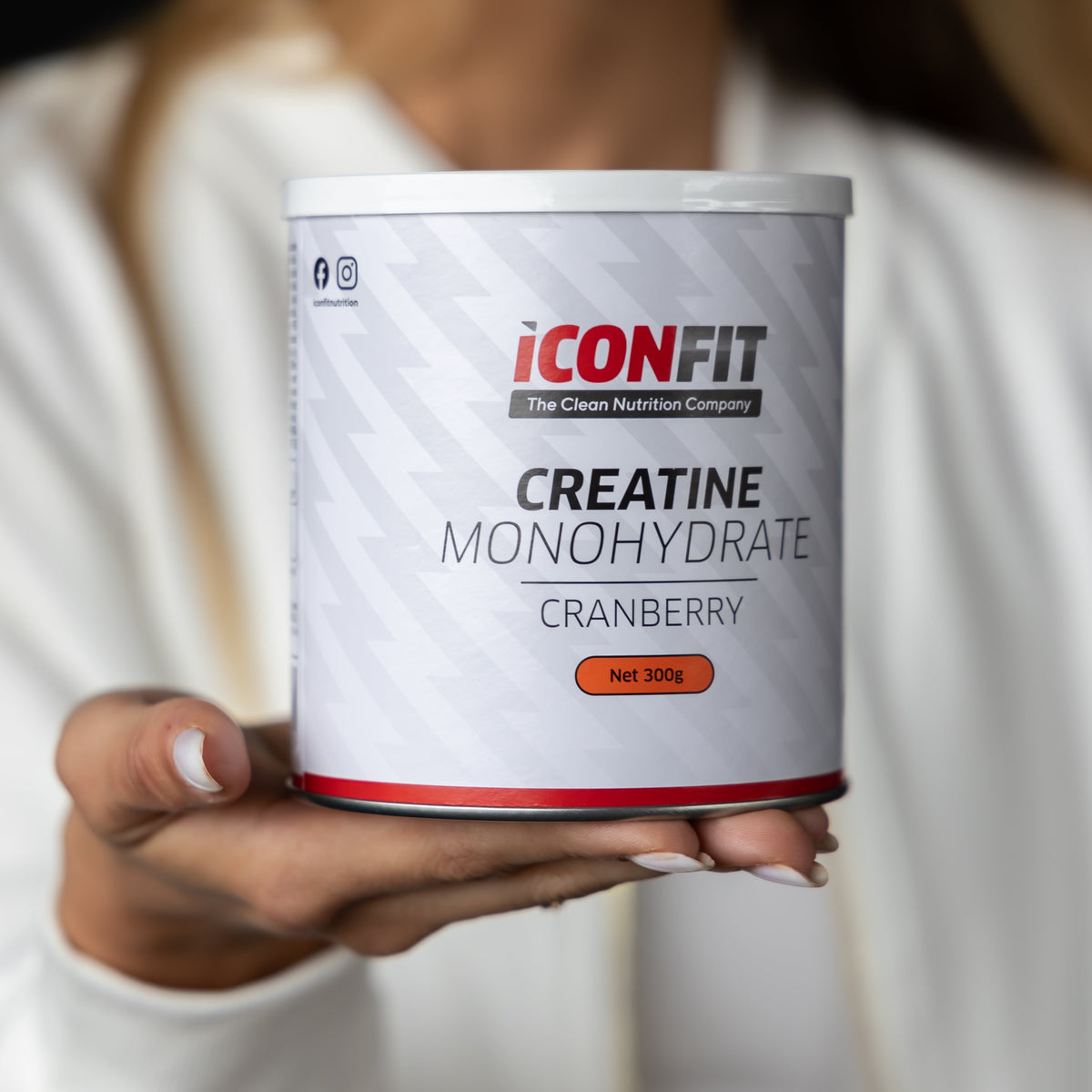
Creatine takes us to the world of muscle training to a large extent. Namely, this natural amino acid compound supports powerful muscle contractions due to its mechanism of action, which is why it is particularly popular among bodybuilders. But don't be fooled into thinking that creatine is only suitable for bodybuilders – the benefits of creatine go beyond that. Creatine is also an effective aid for regular exercisers and is important for healthy aging. Creatine helps to maintain muscle mass and is also associated with effects on the brain and its functions.
We invite you to read on to learn what creatine is, how it supports the body, and get an overview of everything that is important about this one of the most researched supplements.

What is Creatine?
Creatine is a compound consisting of three amino acids that the body synthesizes in the liver, pancreas and kidneys at a rate of about 1g/day. Humans also obtain creatine from food – mainly animal foods such as seafood and red meat. This is why creatine consumption can be especially beneficial for vegetarians and vegans – their diets lack or have very limited natural sources of creatine, which is why the body's creatine stores are often lower.
Creatine is an important component of cellular energy metabolism, supporting the regeneration of ATP (the so-called cellular fuel). One of the most important roles of creatine is to help quickly convert ADP (a partially depleted energy carrier) back into ATP, especially in situations where energy is needed immediately and in large quantities – such as during muscle work, sprinting or the rapid response of immune cells to infection. Simply put, creatine helps cells recharge themselves with energy.
About 95% of creatine is located in skeletal muscle in the form of phosphocreatine and free creatine , the rest in the brain, heart and other tissues.
The Effect of Creatine on Muscle Energy Production
Most of the creatine is located in skeletal muscles. Let's look at how it affects muscle function. As we discussed above, creatine helps cells quickly regenerate energy (ATP). In terms of its mechanism of action, creatine enables rapid muscle fiber contractions. These muscle fibers are the main power sources in fast and explosive movements, such as weightlifting and sprinting. Creatine allows for more repetitions and a higher training volume, which in turn means better performance and muscle growth over time.
Science and The Effects of Creatine on Muscle Performance and Energy
Creatine is one of the most researched supplements and various studies confirm that creatine has many health benefits:
-
It is effective in increasing maximum muscle strength.
-
Supports the energy system underlying performance, but may not always improve explosive performance (e.g. jump height).
-
Helps athletes recover faster and achieve optimal performance with less rest.
Based on research evidence, athletes primarily use creatine to enhance strength and explosive performance. Scientific reviews from the early 2000s, which compiled data from dozens of resistance training studies, have shown that the combination of creatine supplementation and strength training improved maximal strength by approximately 8% more than strength training alone, and muscular endurance by about 14% more compared with placebo. These findings are based on pooled interpretations across multiple studies.
Creatine helps increase both muscle strength and muscle mass when used in conjunction with weight training.
Creatine draws water into muscle cells, which is not muscle growth, but it creates an environment within muscle cells that, when combined with weight training, promotes actual muscle mass growth. Creatine also supports cellular energy production, allowing you to train at higher loads and intensities. This in turn promotes stronger training adaptations, resulting in increased muscle strength and lean muscle mass. Creatine does not replace exercise, but rather enhances its effects.
Research shows that creatine not only improves exercise performance, but also supports recovery from exercise by reducing muscle damage, inflammation, and fatigue, and helping the body better tolerate intense exercise stress.
The Effects of Creatine on Different Types of Training
Creatine has different effects on different types of training:
-
High-intensity, short-term efforts (<30 s, sprinting, strength training) benefit the most from creatine.
-
Anaerobic endurance improves moderately.
-
Long-term aerobic performance, the effect of creatine is reduced, but it can improve lactate threshold (the level of exertion above which you tire more quickly and your ability to maintain performance decreases significantly) and exercise tolerance.
-
Creatine helps reduce fatigue during multiple consecutive efforts .
Support your training performance and recovery with ICONFIT creatine monohydrate.
 Check out ICONFIT Creatine here
Creatine and Brain Health
While creatine is widely recognized as a safe and effective physical performance enhancer, its use for improving brain and mental health has garnered increasing attention in recent years. Creatine is often touted as a “brain booster,” yet current science does not support strong claims about creatine as a universal brain booster.
However, the possible role of creatine in supporting the brain can be explained through the following mechanisms:
- Creatine is an important part of brain energy metabolism. Since the brain is a very energy-demanding organ, creatine can help stabilize energy supply in situations where energy needs are high (e.g., mental effort or stress).
- Creatine supplements can increase brain creatine stores, but this process is slow and often only occurs with higher doses and long-term use, as the movement of creatine across the blood-brain barrier is limited.
- Cognitive effects in healthy people are modest and inconsistent – some studies have observed small improvements in working memory, attention, or mental toughness, while others have found no effect.
Research suggests that creatine is most likely to be beneficial in situations where brain energy metabolism is temporarily disrupted.

- In case of sleep deprivation
- In case of mental fatigue
- In conditions of tissue oxygen deficiency (hypoxia)
- For changes related to aging
Creatine and Aging
The loss of muscle mass and strength that occurs with aging, or sarcopenia, can significantly impact mobility and quality of life in older age. Research shows that creatine can help slow this process, especially when combined with strength training. Creatine’s ability to support better exercise performance and stronger muscle adaptations, which are key to maintaining muscle mass and strength, makes it an effective tool for preventing sarcopenia.
Additionally, creatine has been found to reduce muscle protein breakdown and support signaling pathways that promote muscle growth, helping to slow down age-related muscle loss.
In recommended amounts, creatine is generally safe and well tolerated in the elderly, making it one of the most promising supplements for supporting aging muscles.
Creatine Monohydrate – is it The Best Creatine?
There are several different forms of creatine available on the market, such as creatine monohydrate, creatine HCl, buffered creatine (e.g. Kre-Alkalyn), creatine ethyl ester, and various creatine salts (e.g. citrate). They often promise better absorption, faster effects, or fewer side effects. However, research shows that most of these different forms do not offer any significant advantage over classic creatine monohydrate, which is considered the gold standard of creatine. And rightly so. This most studied form of creatine has scientifically proven effects:
- Effectively helps increase muscle strength and mass
- Improves exercise performance
- Supports recovery
It is a very safe, well-tolerated, and cost-effective form.
Support your training performance with a high-quality creatine monohydrate supplement from ICONFIT.
 Meet ICONFIT Creatine Monohydrate here
Creatine Consumption – How Much Creatine to Take
There are no official recommended daily intakes for creatine, but it is estimated that the daily requirement for creatine is approximately 2 g, about half of which is synthesized in the body and half is obtained from food.
When creatine is taken as a supplement, its effectiveness depends primarily on correct and consistent dosing, not on complicated dosing schedules. For most people, 3–5 grams of creatine per day is sufficient to increase muscle creatine stores and support muscle strength, muscle mass, and exercise performance.
If desired, creatine can also be started with a so-called loading phase, which aims to replenish muscle creatine stores more quickly. During the loading phase, approximately 20 grams of creatine per day (e.g. 4 × 5 g) is usually consumed for 5–7 days, after which the usual dosage of 3–5 g per day is switched to. This approach can give a noticeable effect within the first week, but is not necessary, as the same end result can be achieved without a loading phase – just over a slightly longer period of time.
It is important to know that larger amounts do not provide additional benefits for most people and may increase the risk of digestive upset. Therefore, for many, the best and simplest solution is to consume 3–5 g daily, which is safe, effective and easy to follow.
When is The Best Time to Take Creatine?
Creatine, especially creatine monohydrate, is a much-studied supplement, with research somewhat conflicting regarding the best time to consume it.
Studies show that taking creatine close to a workout is more effective than consuming it at other times of the day.
On training days, consume creatine:
- 1–2 hours before training
- Up to 1 hour after exercise
Studies show no significant difference in the effectiveness of creatine taken before or after exercise, so the timing around your workout is more important than the exact time of day.
On non-training days, the timing of consumption is not very important - the goal is simply to keep muscle creatine stores high. 3–5 g of creatine per day is sufficient, preferably with food.
The effects of creatine may be greater when consumed with a protein- and carbohydrate-rich meal. This is primarily attributed to the insulin response induced by carbohydrates, which may promote creatine uptake into the muscles, and protein intake, which supports muscle mass and strength gains and more efficient nutrient utilization.
Creatine Powder or Capsule – What to Choose?
Creatine powder and capsules generally contain the same active ingredient – creatine monohydrate, making them both effective ways to consume creatine. The main differences between the two forms concern absorption rate, ease of use, dosage, and price.

In summary, both the powder and the capsule are equally effective, so the choice depends on the individual's own preferences.
Are There any Side Effects From Using Creatine?
Creatine is one of the best-studied and safest supplements when consumed in recommended amounts (3–5 g per day). However, there are some myths about creatine and its safety that we want to debunk here.

Creatine directs some of the body's water into muscle cells, and it has been suggested in the past that creatine can cause dehydration and muscle cramps. However, this assumption has not been scientifically confirmed. On the contrary, several long-term studies with athletes have shown that creatine users experience less dehydration, muscle cramps, and muscle injuries.
Creatine is generally a safe and well-tolerated dietary supplement for healthy people when taken in recommended amounts for up to 5 years. Most scientific studies do not show a link between creatine use and serious health risks. However, there are certain groups of people who should exercise caution or consult a doctor beforehand.

Possible side effects of creatine:
- Nausea (rarely vomiting)
- Diarrhea
- Weight gain due to fluid retention (not an increase in fat mass)
If side effects occur, it is worth dividing the daily amount of creatine taken into smaller doses throughout the day.
Why to Choose ICONFIT Creatine?
ICONFIT creatine products are designed for those who value quality and proven effectiveness. The range includes supplements that support training performance, muscle growth and recovery. The products use micronized creatine, which ensures particularly good solubility.
 Check out the products here
Creatine is one of the most researched and evidence-based supplements, with a clear supporting effect on muscle strength, performance and recovery from exercise. It supports the rapid supply of energy to the body, helping to train more intensely and with less rest.
Creatine is not just for top athletes – it is suitable for anyone who wants to improve their training results, prevent age-related muscle loss, and support the brain in situations where energy supply is disrupted.
If you're looking for a safe, effective, and scientifically proven supplement to support your workouts, creatine is a solid choice.
Links to Sources
- Perspective: Creatine, a Conditionally Essential Nutrient: Building the Case, ELSEVIER, ScienceDirect
- Creatine, Mayo Clinic
- Everything You Need to Know About Creatine, Stanford Lifestyle Medicine
- What is creatine? Potential benefits and risks of this popular supplement, Harvard Health Publishing
- Creatine supplementation with specific view to exercise/sports performance: an Update, PubMed Central
- Creatine for Exercise and Sports Performance, PubMed
- “Heads Up” for Creatine Supplementation and its Potential Applications for Brain Health and Function
- The effects of creatine supplementation on cognitive performance
- 6 Types of Creatine and How to Choose the Best Option, Healthline
- Creatine Pills vs. Powder: What’s Best for Your Fitness Goals?, Health
- Common questions and misconceptions about creatine supplementation
- When Is the Best Time to Take Creatine?, Healthline
- Creatine Supplementation Increases Total Body Water Without Altering Fluid Distribution
- Is Creatine Safe? Side Effects FAQ, Healthline
- Creatine, Cleveland Clinic
- Effectiveness of Creatine Supplementation on Aging Muscle and Bone, Journal of Clinical Medicine
-
Creatine supplementation with specific view to exercise/sports performance: an update, Journal of the International Society of Sports Nutrition, PubMed Central, National Library of Medicine